Feeling rough his week meant I did little, and did it very well. Mostly I wasted time on Twitter either enjoying football conversations or arguing with people rude enough to disagree with me. How dare they? However, I did make excellent progress on two of the Christmas books, and began a third, which I can say now, I may not finish. My niece, who reads lots of books, sent me three novels set in old Edinburgh, and the first chapters of this one I found not very well written, and somewhat conventional, or 'old hat,' perhaps. Anyway, I did finish this one.
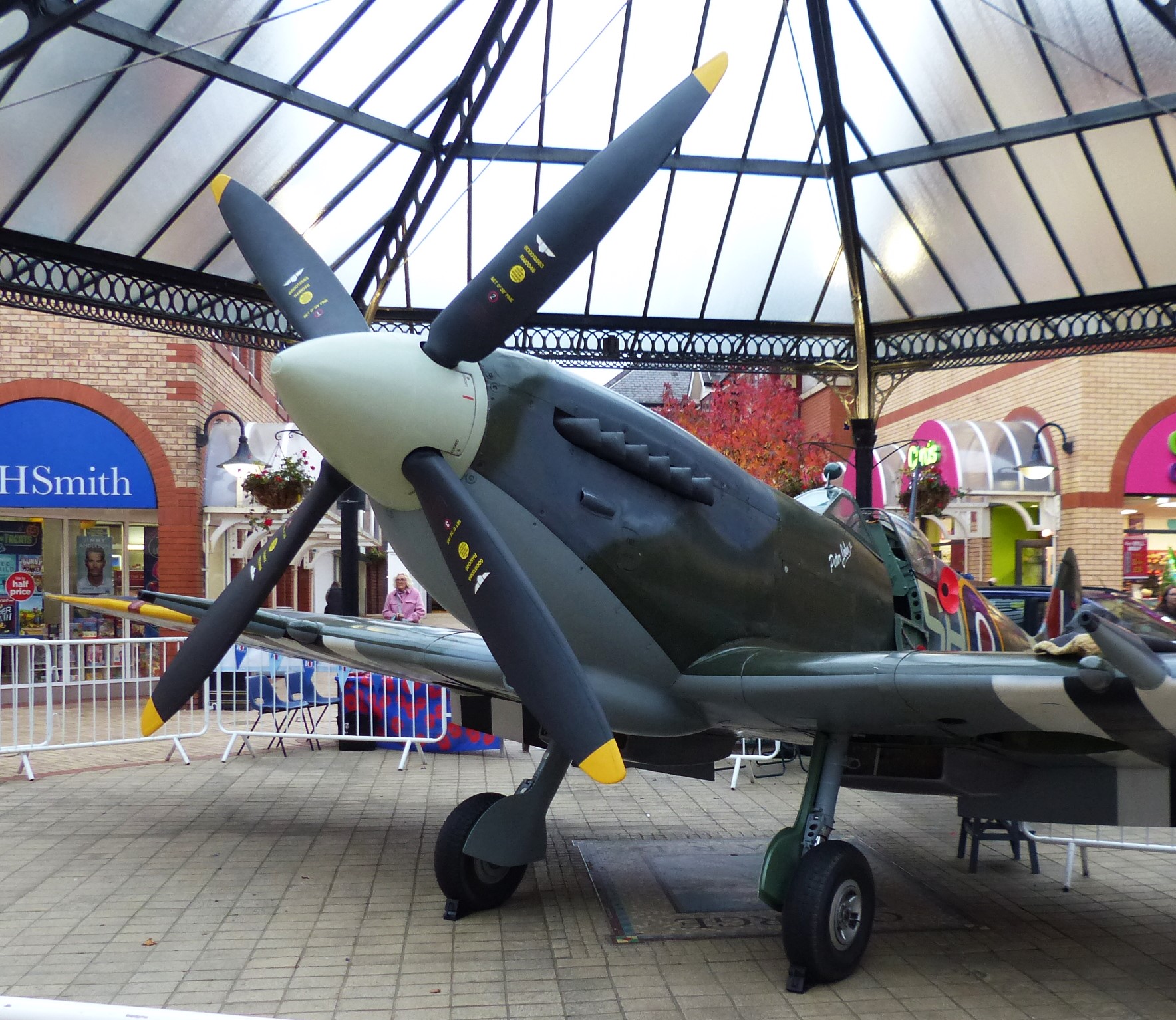
This is a proper memoir. Not one written by a senior figure, possibly to justify his position, but by a mere Spitfire pilot writing down for the family what he could remember of his war. Thus it is not written with a regular authors flourish, instead it is a personal memoir with all the faults of an educated middle class man. Therefore this is worth a look.
Born in 1921 Ken Cam, grammar school educated and clearly a quite bright young man, joined the RAF in 1940, when the war was at its most dangerous. Attempting to be a mechanic he found himself instead heading for flying training, simply because of his educational background. While the RAF had less 'Bull' than the army or navy it retained plenty of the class difference which remains a scourge in the UK, indeed the middle classes flocked to the RAF possibly because they thought of the modern outlook and exciting possibilities available for them.
There follows the tale of the rough newness of RAF life, the aircrew induction making clear the basics of RAF existence, flying training in Tiger Moths, and posting to Operational Training Units. Here Ken learns to fly a real Spitfire, now he is close to the war. Once he has passed this six week course, shortened to three weeks because of 1940 losses in France, he is posted to a fighting squadron. here again are lessons to be learned in too short a time, then the war is entered for real.
Imagine being a 20 year old flying a Spitfire heading to war with no experience and little understanding of what lay ahead!
By the middle of 1942 Ken has shot no-one down, fired at enemy ground stations, escorted shipping and made some mistakes. His time is spent moving from one base to another at the behest of those office dwellers nobody knows. Typical services.
November 1942 saw 'Operation Torch' in North Africa and Ken was 'invited' to serve there. This was to change his life.
The Squadrons duties during this operation comprised working along with the army as they advanced into Tunisia and Algeria. Attacking ground targets in co-operation with the army and routine patrols at other times. This was to bring abut the defeat of Rommel's forces in North Africa, a major step forward to winning the war.
The latest Spitfire which our pilot was using was a mechanical miracle, designed just before the beginning of the war it took its place in military history. However, no aircraft of those days, like today, is perfect. As 'operation Torch' came to a close Ken and his squadron were urgently sent on a dawn course for Malta. This required low level flight, to avid radar, and a long and quiet trip over the Med.
However, a puff of white smoke revealed a problem, soon Ken was flying alone heading either for the sea, warm in comparison to the Atlantic but still cold and wet, or finding a place to land. There is a small island called Linosa, half way between Tunisia and Malta, and indeed between Tunisia and Sicily, where the aircraft landed, with a crash.
Stumbling out of the wreckage Ken Cam was picked up by Italian soldiers, treated by an Italian Naval doctor, and well looked after on the island. It is clear the Italians were never committed to this war as fanatically as many of the Germans were. Overall, the treatment received from the Italians was better than that from the firmer Germans. Most German troops obeyed the written and unwritten laws of war for the most part. The SS, or desperate men did not.
Soon the pilot was being transferred to another island, from here he was taken on a sea trip by a submarine. The sub travelled by night, spending the day on the sea bottom for safety. Eventually he was deposited in Italy, here life as a POW got worse.
Ken Cam was to spend the rest of the war as a POW with little chance of escape. The allies took over the island of Linosa, receiving a note from the Italian officer in charge written by Ken, indicating the good treatment he had been given by the islanders and their defenders. It is to be regretted he left the island shortly before they arrived.
The treatment under the Italian authorities was as decent as possible, however, as time passed and the author moved from one camp to another, the allied landings on Italy were beginning to tell. Eventually the Germans took over the camps, worse still, they were soon under control of the SS. Mild authority under Italians was sufferable, control under hard hearted dangerous, and willing to kill SS soldiers was not.
One camp in which Ken stayed for a while as Adolf's guest was Stalag Luft III, made famous by the movie 'The Great Escape.' German guards were efficient, and escapes were few. As the war slipped away Hitler ordered those who escaped during the 'Great Escape,' to be shot, and most were.
Bad treatment followed often enough, especially when the movement north took them into Austria.
The SS exposed the POWs to bad treatment from the locals, while continuing to move them at short notice.
Eventually, a long march during 1945, from Zagan in Austria, occasionally in cattle trucks, often by walking, all the way through Hamburg, which brought some bad responses from the natives after all the dockland city had been through, to Lubeck where the war ended for Ken Cam.
He returned home, was rested somewhat, described his psychological problems resulting in being a POW for 3 years, and spent another 18 months with the RAF, eventually in Palestine as trouble there was brewing.
The story ends well, he gets a job, marries, raises a family, and from 1997-00 wrote down his war service for the family. All ends well for him.
The book si easy to read, contains lots of small stories from activities in various bases, sometimes concerning the war, sometimes concerning the local fun and games. The descriptions come from the memories put aside for many years. Time amends our memories, others are enhanced. In the authors case his memory was clearly enhanced when many years later he holidayed in Linosa. Once again meeting the man who found him after the crash, and some of the people who tended to him while he was there.
Millions were involved in the war, many cannot write their stories, being dead makes this difficult, and each story is different from the next. Until he was a POW Ken had a 'good war,' after that things were not so good.
This book is well worth an easy read, an insight to one man's war, the RAF as it was, and probably remains, and I recommend it.